

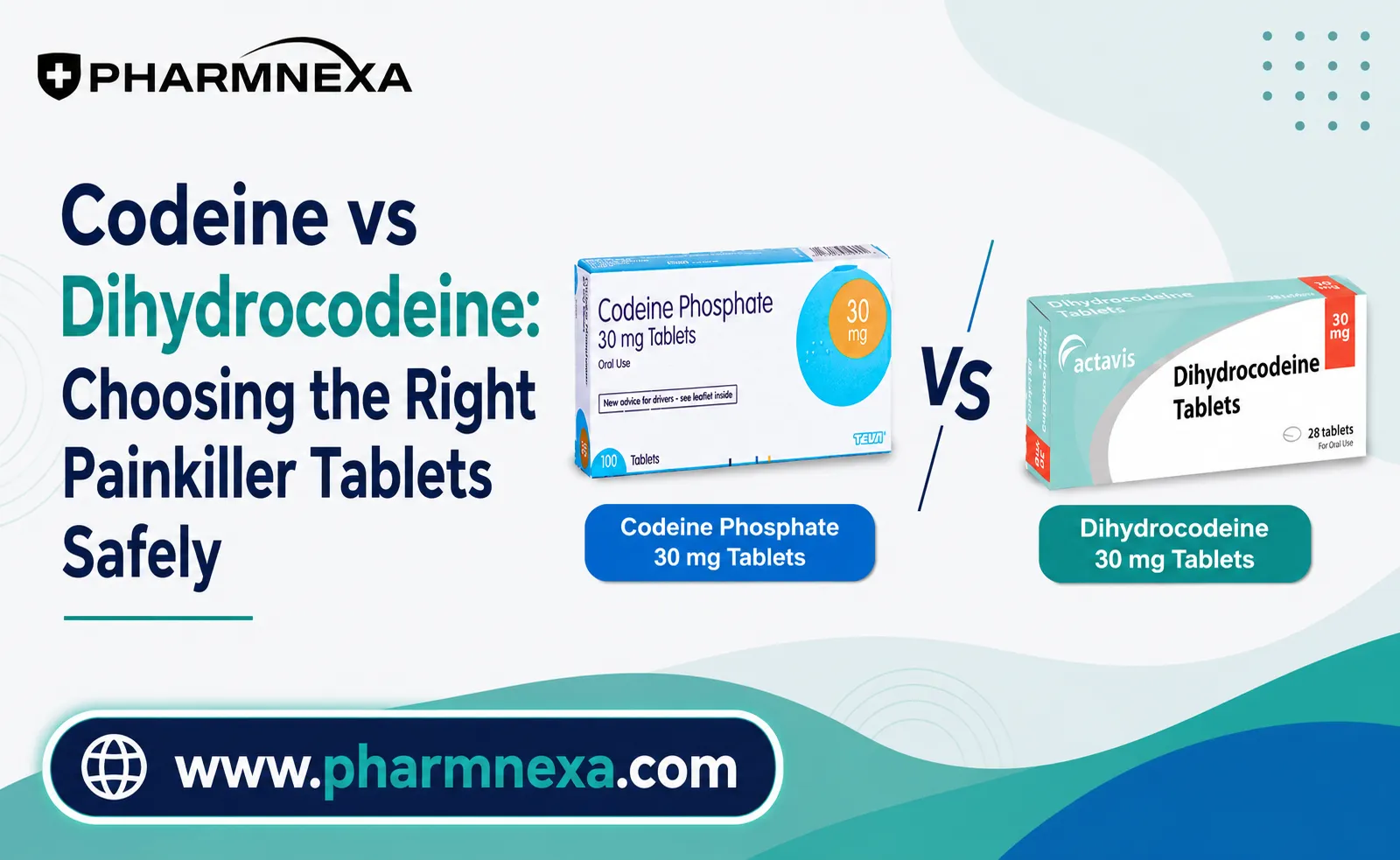
There is no standard method for managing pain, and when OTC remedies fail, individuals usually turn to painkiller tablets that are stronger and encounter comparisons like codeine vs dihydrocodeine. Although they appear to be alike, there are subtle distinctions between the two drugs.
Understanding the basics
Both codeine and dihydrocodeine are types of drugs that fall under the category of opioids. These drugs are designed to change the way the brain perceives pain. Thus, they help make one experience less painful sensations. Usually, such medications are prescribed to those who fail to get pain relief using other methods.
The most prominent difference between codeine vs dihydrocodeine can be described as the potency of these medications and how the body reacts to both.
When these medications are used?
These drugs can be recommended by doctors for moderate pain, particularly post-injury, post-surgery, and in some diseases. Generally, they are used for a short period of time.
Despite the fact that many people try to find painkiller tablets of higher dosage, it does not always mean better effectiveness. It is important to choose a drug that fits the specific type of pain.
Key differences to know
In the comparison of codeine vs dihydrocodeine,
-
Strength: Dihydrocodeine may be more effective in some cases
-
Time of effect: Time of action depends on drug form
-
Tolerance: There may be different levels of tolerance for each
-
Side effects: Common side effects may apply to both, but there are differences in intensity
Understanding the differences will help in deciding which medication to take.
Risks and side effects
Similar to all opioid drugs, both have side effects such as drowsiness, dizziness, and constipation. Other side effects include nausea and decreased alertness.
Another danger involves dependency that occurs when these drugs are used repeatedly. This side effect exists for both codeine and dihydrocodeine. It is not well understood in debates about codeine vs dihydrocodeine.
It is best not to combine these drugs with alcohol or other sedatives because this would lead to more adverse reactions.
Why self-selection can be problematic?
It is typical for people to think that moving to something better will be able to solve their issue. Unfortunately, pain cannot be so easily solved. If there is no knowledge regarding what the cause is, the change will bring only a small relief.
It is very popular for people to look for painkiller tablets and not think about other aspects, like posture or other things that could result in pain.
What supports better outcomes?
The treatment for long-term pain is often not limited to taking medicine alone. Depending on the reason behind the pain, some effective techniques could be:
-
Therapy or exercise
-
Adopting good practices and proper posture
-
De-stressing oneself
-
Slowly strengthening muscles.
The above-mentioned techniques focus on solving the problem at its source.
When to seek professional advice?
Pain that persists for more than a few weeks or starts to affect you on a daily basis warrants visiting a doctor. He/she will assess your symptoms and suggest the best solution.
Occasionally, it may become necessary to choose between using either codeine or dihydrocodeine. What is important is that such decisions be taken in a suitable way, with evaluations, monitoring, and any adjustments being necessary.
Final takeaway
Codeine vs Dihydrocodeine: This comparison is important because it’s just one element within the wider context. While both medications can be beneficial, they carry potential dangers that must be considered.
The proper way to achieve pain management includes identifying the root cause of the problem and implementing healthy changes, along with taking proper medication.
